Best Barcelona Day Trips Under 2 Hours by Train
Disclaimer: This post may contain affiliate links. Please see our Disclosure Policy and Advertiser Disclosure for details.

Barcelona is one of the most incredible cities in Spain to visit, and it’s very easy to spend an entire vacation just exploring the city itself.
But if you’re taking a trip to Spain, it can feel kind of like a wasted opportunity to limit yourself to just one location, right? And with Europe’s generally fantastic rail infrastructure, it’s easy to hop on a train and visit some of the more outlying attractions.
Using Barcelona as a base, there are tons of places you can reach in under two hours on a train, which leaves you plenty of time to explore before heading back. Let’s talk about some of the best options, as well as the things you’ll need to know to make your train-riding experience as pleasant as possible.
Compelling Day Trips in Under Two Hours from Barcelona
What are the best day trips you can take using Barcelona as a base? You might be surprised at how far you can reach by rail.
#1: Montserrat
If you go to Barcelona, and you don’t make time to spend a day at Montserrat, what are you even doing?
Actually getting to the monastery at Montserrat is more than two hours of travel, but a good portion of that travel is part of the experience. That’s because your first leg of the journey is a train to the base of the mountain, but your second leg of the journey is taking the cogwheel train up the mountain. This is where your experience truly begins, and the slow climb with glimpses through the mountains at the expanse of the countryside below is unforgettable.
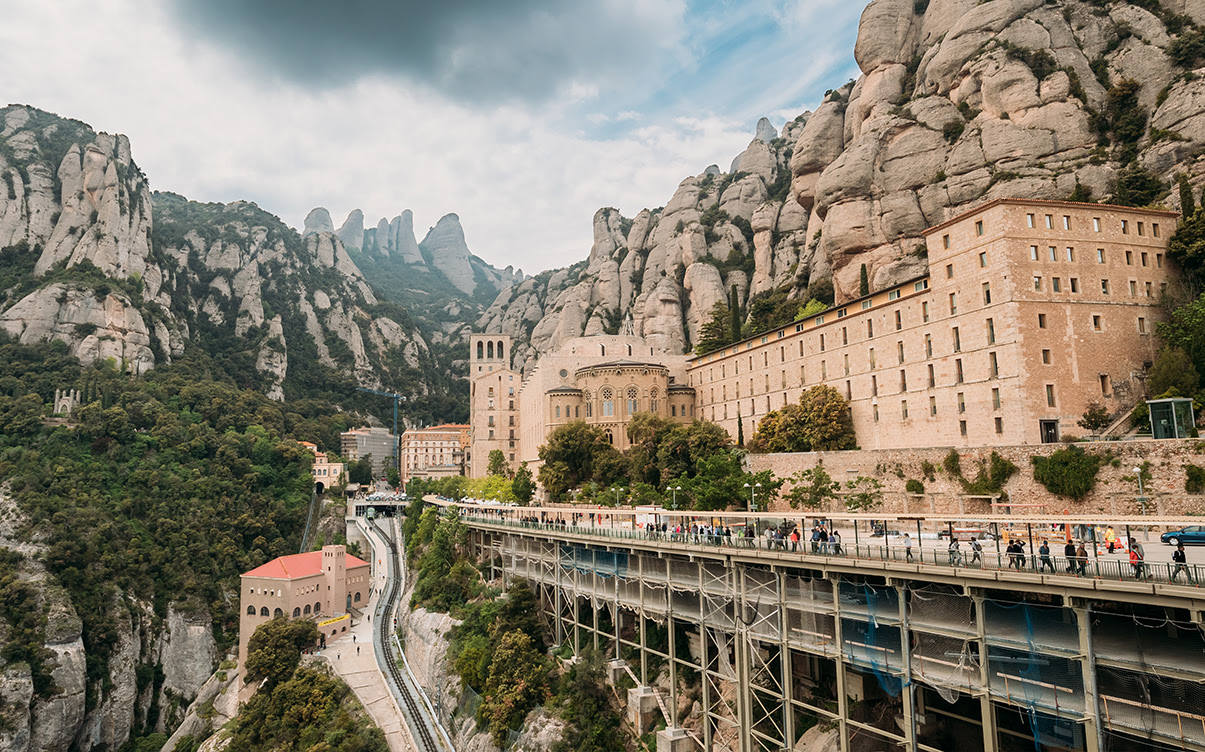
The rest of the trip will have you hiking some incredible trails through the mountains and exploring the publicly accessible parts of the monastery. They have historical movies about the monastery, the oldest boys’ choir in the world, and the famous black Madonna. The funicular to the top of the mountain is also well worth it, and the hike back down is easier than the hike up would be.
#2: Figueras
Located up the coast from Barcelona, Figueras is a relatively small city with a very interesting history, mostly of being set on fire, bombed, and otherwise destroyed. Thankfully, it’s been nearly a century since the last time that happened, and it’s pretty unlikely to happen again while you’re there, so you can enjoy the sights in peace.

What are those sights? There are a few.
- Sant Ferran Castle. One of the oldest bits of architecture still standing, the castle was built in 1753 and has a pentagonal layout you don’t see as often.
- The Technical Museum of the Emporda. This is a museum of technology specializing in, among other things, typewriters, with hundreds of antique typewriters to see.
- The Museu de l’Emporda, an art museum with a history dating back to 1885 and focusing heavily on the Catalan art scene.
- The Dali Theatre and Museum, a museum dedicated entirely to Salvador Dali’s surrealist works. The city also has tributes to Dali all throughout. It is where he was born, after all.
There’s a lot to see and do throughout the town, and you can also take a quick road trip (less than an hour) to reach the Gulf of Roses for some excellent beach time, too.
#3: Tarragona
Also located along the coast but in the complete opposite direction, Tarragona is a very compelling destination for a few reasons. For one thing, the train ride down is just over an hour and is almost entirely along the coast, giving you a great view the whole way there and back.
If you’re a fan of ancient Roman architecture, this is also one of the best places to visit. There’s a lot of it to be found throughout the town and in the surrounding areas. You can see the Ferreres Aqueduct, the villa of Centcelles, and if you’re willing to go a bit further afield to Reus, the heritage building Casa Navas is incredible.
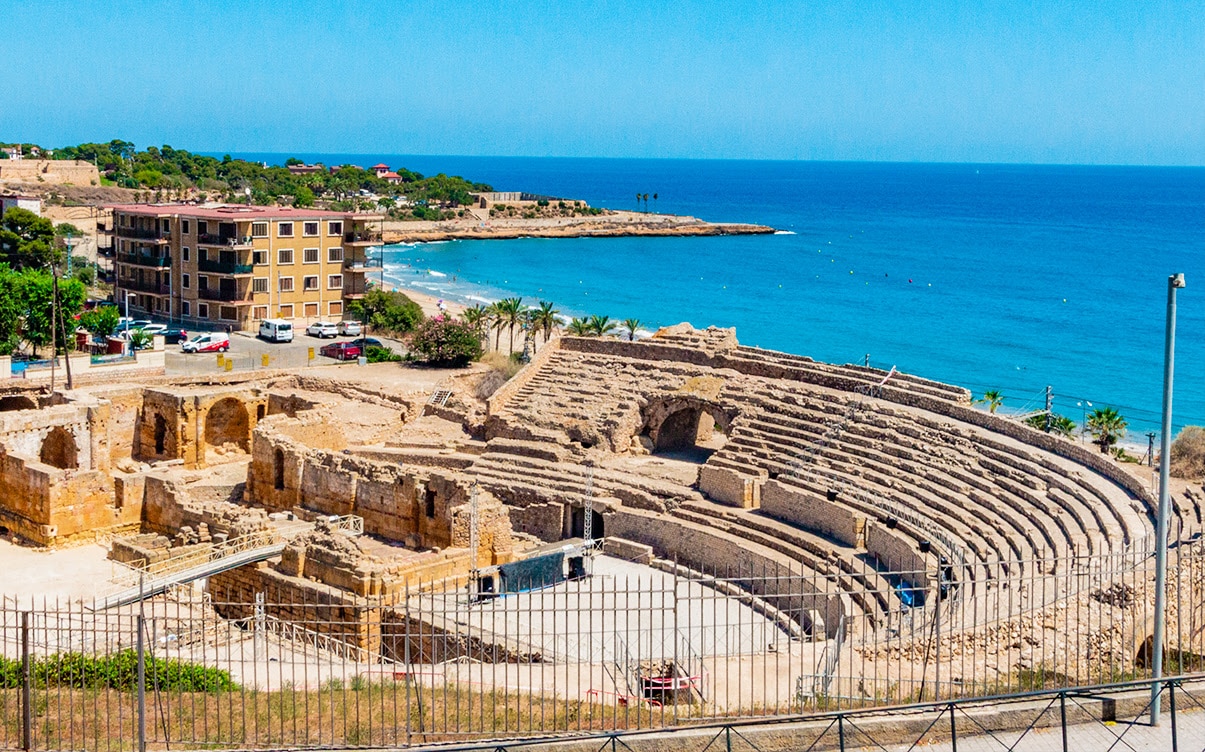
Tarragona is also a port city where you can walk out onto a pier and visit the Far de la Banya museum, follow the beach to some incredible swimming, or go just a tiny bit inland and explore PortAventura World, an amusement park.
All in all, there’s definitely enough there to fill a day and leave you satisfied on the train ride back to Barcelona in the evening.
#4: Girona
Girona is one of the most popular day trips from Barcelona and with good reason. It’s an absolute epicenter of culture and history, with so many museums they have their own wiki category. There’s also an incredible cathedral that becomes the center of celebration for numerous holidays and festivals. Sant Feliu is one of the few churches in Spain that has a spire and has stood since the 14th century. For something even older, Sant Pere de Galligants has stood since 950.
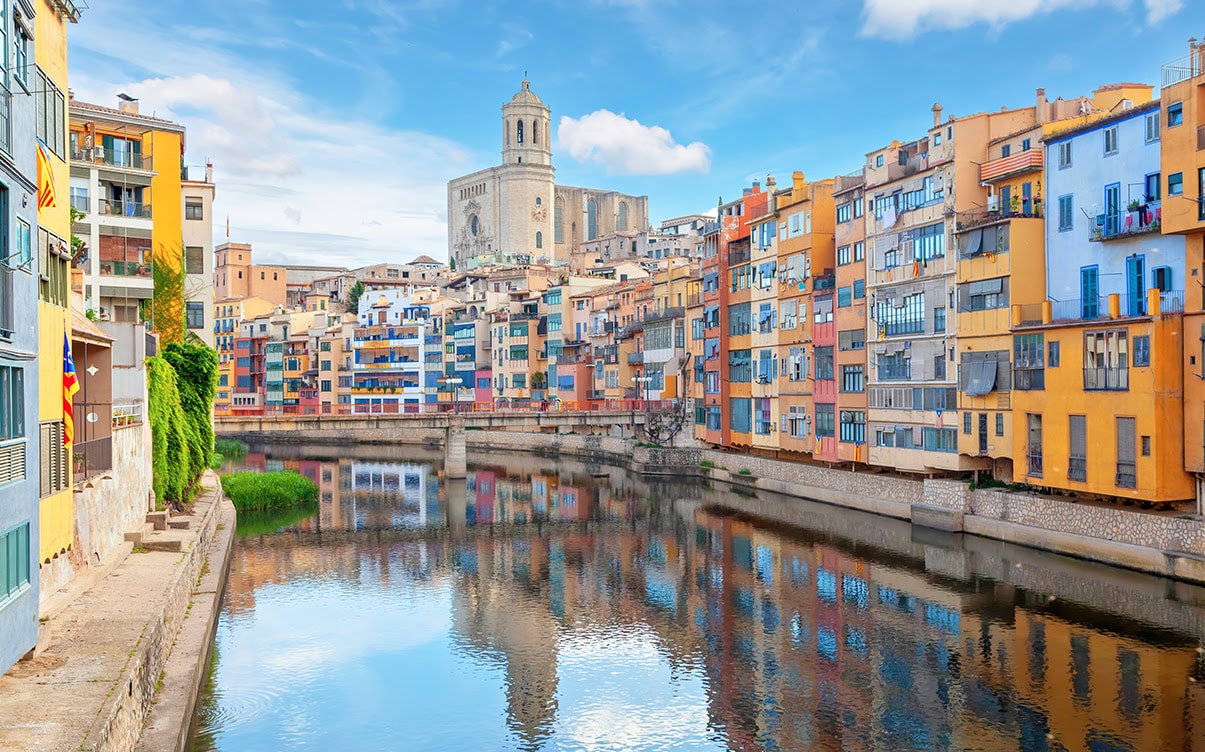
Fans of pop culture will see some familiar sights here as well, as the Girona Cathedral has been used as a filming set piece for a variety of films and even part of Game of Thrones.
All of this is available with just an hour and a half train ride from Barcelona. No wonder it’s so often recommended to travelers as one of the top day trips!
#5: Manresa
This one is a little off the beaten path, except it’s actually very much on a beaten path. Manresa isn’t one of the more popular tourist destinations. What it is, though, is the endpoint for one of the pilgrimages, the route from St. Ignatius’ home in Azpeitia all the way to Manresa. The pilgrimage is 640 kilometers, and it’s quite out of our itinerary for a day trip, but the endpoint is a compelling place to visit. The train ride to reach it is about an hour and a half.
As a town that is primarily known for textile, glass, and metallurgy, there’s a ton of very compelling art to see. It’s also the home to the 14th-century Basilica of Santa Maria de la Seu, which took over 75 years to build.
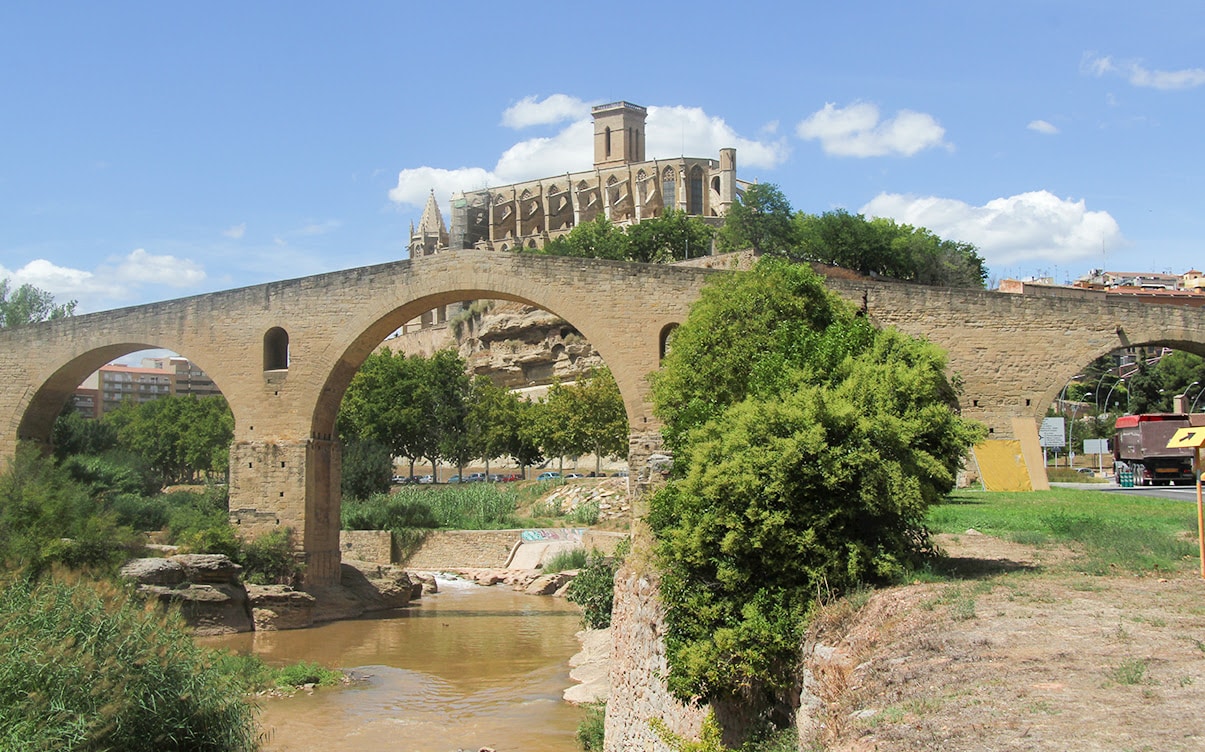
Manresa is primarily a compelling place to visit because it’s not going to be swarmed with tourists like places like Girona or Montserrat. Instead, it’s more laid back, populated by natives, and a whole lot less crowded. That’s not to say you won’t see anyone from out of town, of course, but it’s calmer.
Other Potential Rides
There are, of course, a ton of other options all throughout this region of Spain.
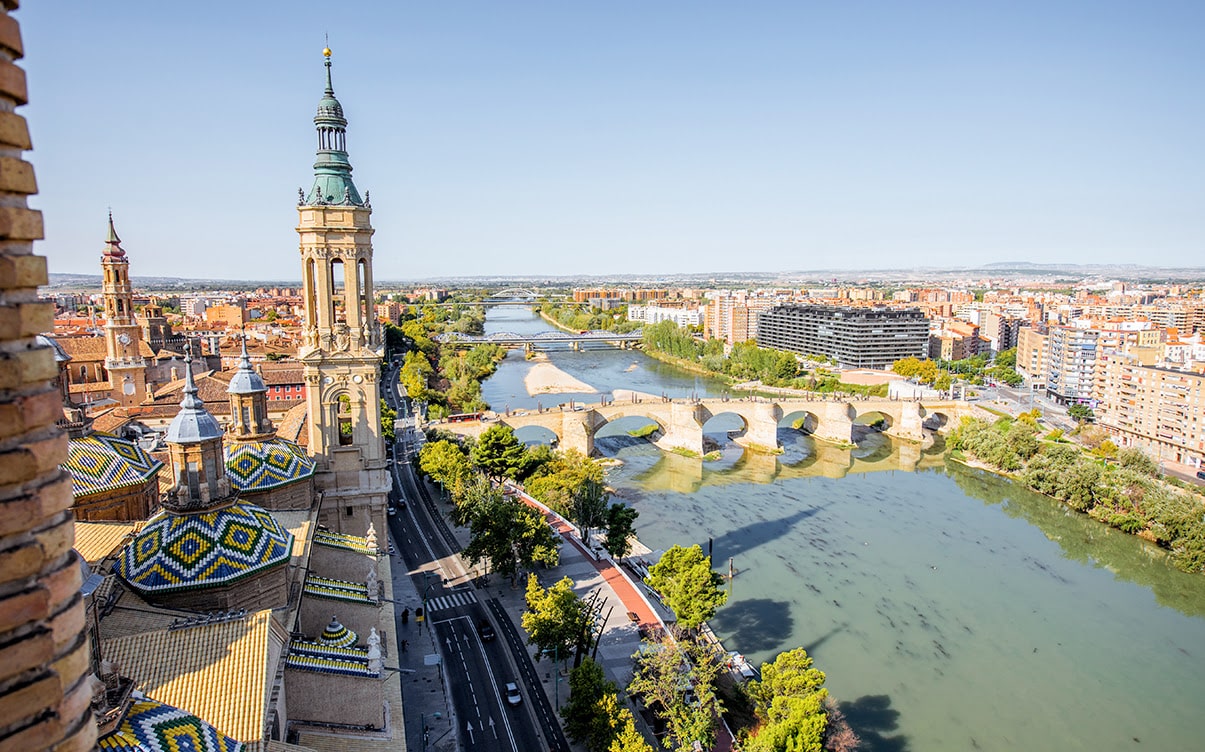
Here are just a few of your other options:
- Lleida is only an hour’s ride by high-speed train.
- Zaragoza is an hour and a half by high-speed as well.
- If you stretch your time budget, Madrid is just three hours.
- Valencia, too, is about three hours, depending on the route.
There are tons of smaller towns to explore as well, and entire tours that take you through all kinds of small medieval villages and historic sites as well.
Tips for Making Train Travel in Spain Nice and Smooth
Rail travel is largely similar anywhere you are in the world, but there are obviously going to be quirks you’ll want to know about the railways around Barcelona. We’re not native to the area, of course, so we only have our perspective as travelers and visitors, but here’s what we’ve put together.
First of all, if you want to explore alternative destinations or look over the routes you’d take, Open Railway Map has a great zoomable map you can use to browse rail lines. It can help you get ideas to plan your trips, confirm what lines you’ll be on, and see what options take you where.
Most of the trains in Spain are operated by Renfe. The main exception is the train out to Montserrat, which is operated by FGC. Renfe’s website can be found in English here.
This is important because you’ll generally want to book your tickets in advance, especially if you’re taking one of the more popular day trip lines during the peak tourist season. The trains can be booked up pretty quickly, so planning your day trips in advance is a great idea.
Note that you can buy tickets up to 60 days in advance. The earlier you can book, the more likely you are to get good seats, and some trains can fill up very quickly during peak season.
That is, when it’s possible to do so. Some trains and lines can only be purchased at the departing station and can’t be bought online. These are generally for the trains that depart every 30 minutes or so, so there’s going to be availability as long as you aren’t waiting for the absolute last second to buy and board.
The fares are pretty reasonable. For example, the trip from Barcelona to Tarragona is about 15 euros one-way. $35 for round-trip travel between a major city and a tourist destination is pretty good!
Round-trip fares are also cheaper than two one-way fares, though the difference is only about 20%, which isn’t a lot for short train trips like these. It’s up to you if that’s the better choice for your itinerary.

Should you buy a Spain rail pass? Rail passes are always an option, but they tend to be better if you’re planning to spend longer in the country or travel longer distances. Unfortunately, Spain’s rail passes aren’t all that convenient for adventurers; you need to couple it with reservations for specific seats on specific trips, and it’s not as flexible as just buying tickets as you need them. If you have your whole itinerary planned out in advance, the rail pass might be a good option. For our day trips, it’s just not worthwhile.
It’s also worth mentioning that there are significant parts of Spain that aren’t covered by the rail passes, or even train lines. There are a lot of really cool places to visit within two hours of Barcelona by car, but didn’t make our list because there’s just no rail line that goes in that direction.
Obviously, if you want to take a train to a nearby destination and then rent or book a car to take you the rest of the way, that’s another story entirely. It opens up a ton of options, but that’s the subject for another post, another time.
Should you even be taking the trains? It’s kind of up to you. The coastal train rides from Barcelona are frankly incredible if you have seaside views, and the train and funicular rides up Montserrat are often the peak of a trip to Barcelona.
Other, more interior trains? Maybe aren’t quite as good, in terms of views, comfort, or utility. While Europe in general and Spain in particular have decent rail infrastructure, especially compared to anything we Americans are used to, the public transit via bus is leagues better. Bus lines are more frequent, more flexible, and sometimes even faster.
First class or not? This is another personal preference. The trains in Spain are generally comfortable in the first place, but the first-class carriages are a little more plush, give you a little more room, and are generally well-insulated from the noise and bustle of crowds. Is it worth an extra ten or so euros per trip when it’s available? Your call.
One tip you’ll definitely want to keep in mind is that the trains run on time. Barring accidents or other delays, the trains are generally going to depart when they say they’re going to depart. Make sure to arrive at the station early to go through any baggage checks and check-in processes and even just to leave yourself room to navigate the station. In particular, Barcelona-Sants is large and can be tricky to navigate, and it’s easy to get distracted by the architecture, so leave yourself that wiggle room.
As far as baggage is concerned, for day trips, you shouldn’t need to worry too much about checked luggage or anything too intense.
Oh, and don’t expect much from the wi-fi on the trains. It’s somewhat notoriously unreliable and restricted to the first-class cabins anyway. Bring a book or enjoy the view. Spain is too beautiful to let it pass by while you scroll through social media!
Have you gone on day trips around Barcelona? Are there any you wish we would recommend? Let us know in the comments!