Amsterdam Canal Districts: Which Area Should You Stay?
Disclaimer: This post may contain affiliate links. Please see our Disclosure Policy and Advertiser Disclosure for details.
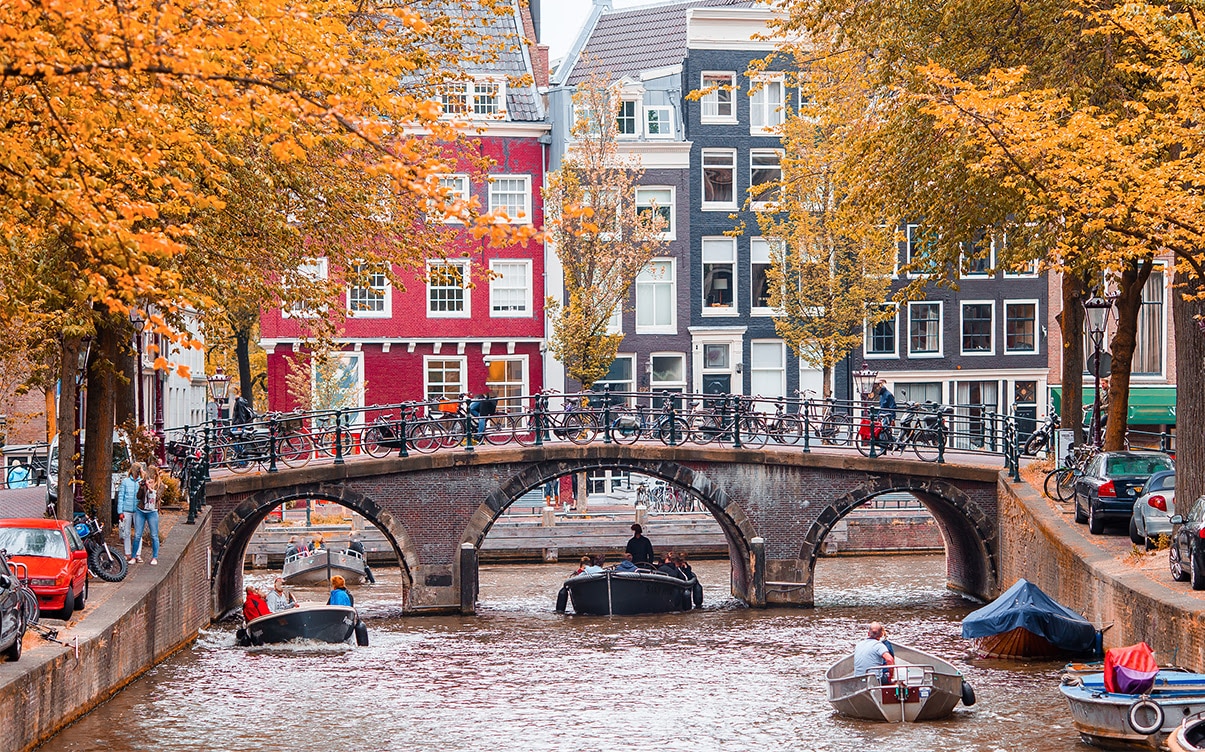
Amsterdam is known for many things. A unique history displayed on every corner. Vibrant culture and friendly – if blunt – citizens. Incredible art, a thriving nightlife, and a whole lot more.
One thing that stands out, though, is the canals. Amsterdam is a city full of waterways, second only to the likes of Venice, and the canals are a key part of what makes it an incredible place to visit.
In fact, the canals of Amsterdam are a world heritage site, and have been for fifteen years. Anyone using the UNESCO lists as a way to guide their travels will end up there sooner or later, and it’s always an incredible visit when you do.
If you want to spend the most time enjoying the canals, where should you stay? Let’s talk about your options, what the realities are of staying near the canals, and what you should expect.
Where Are the Canals in Amsterdam?
When you’re talking about the canals of Amsterdam, you’re talking about one of two things.
The first is just the canals. Amsterdam is a decent-sized city, and it has 165+ canals, totaling over 60 miles of waterways, and with 1,200+ bridges crossing them. In that sense, there are canals all over the city, and your ability to experience them isn’t really limited by where you stay.
The second option, and the one most people think of, is the central canal district of Amsterdam. This loop of canals off the main river circles De Wallen, the medieval center of the city and the red-light district from which many others around the world draw their inspiration (and their name).
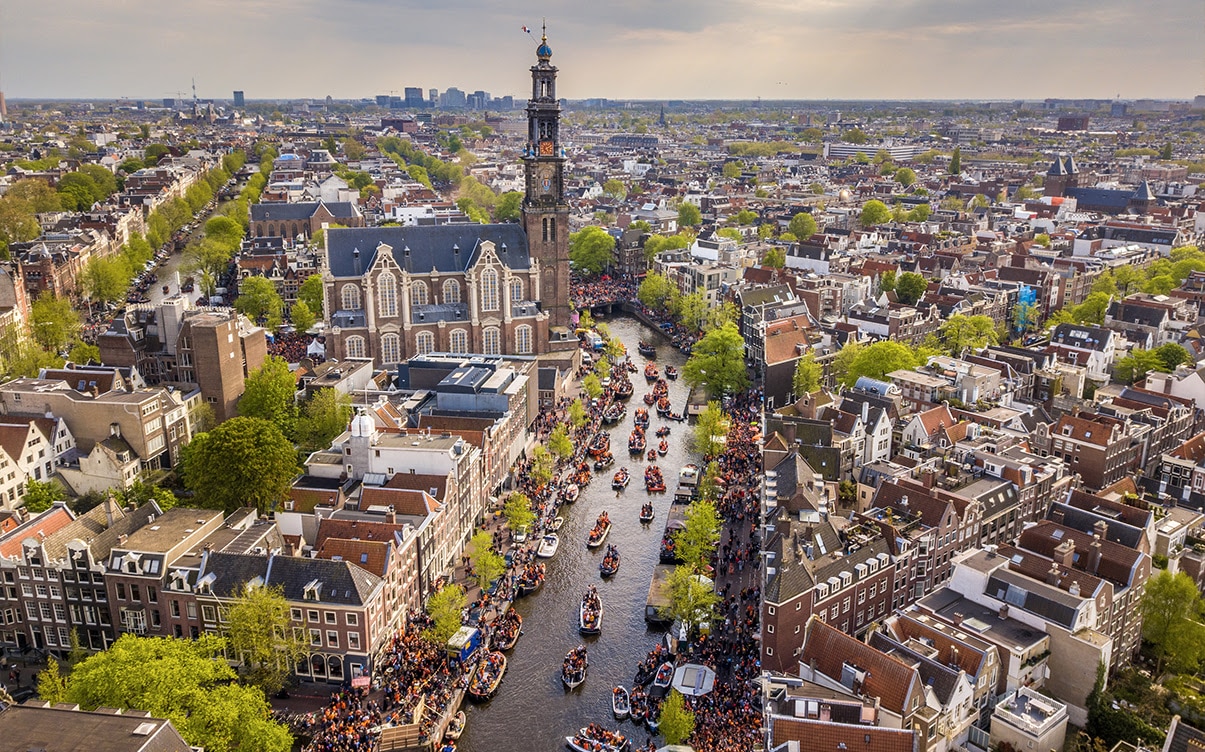
This set of four semicircular canals was created as an early example of city planning, meant to address rising immigration at the time. The area is known as Grachtengordel, and the canals themselves have names like Herengracht and Keizersgracht.
These are the most impressive of the canals and are why Amsterdam is often considered the Venice of the North. Tourists gather, riverboats take you on tours, and tourist attractions line the area, from the Anne Frank House, to the De Oude Kerk (the oldest city building still standing), to the NEMO Science Museum. There’s even a zoo!
You can easily spend most or all of your vacation in the canal district and still have more to see, since every block and every planned, artificial island likely has something you can see and do.
Where to Stay to See the Canals of Amsterdam
If you want to see and experience the canals of Amsterdam, all you have to do is stay somewhere in Amsterdam. While the main canal district is the center of attraction, there are many places throughout the city where you’ll find yourself on the edge of the canals.
That said, what are your options for staying where you can easily experience the canals?
Should You Stay in the Canal District Itself?
First, let’s talk about whether or not you should stay in the canal district, or a little further out from the city center.
As always, it’s a trade-off. Think about what you want out of your trip to Amsterdam. Consider, for example, these two possibilities.
- You wake up to the sound of water lapping in the canals, the city coming alive around you. Sunlight streams in from a window overlooking the canal, with a table perfectly positioned to sit and enjoy a cup of coffee and a breakfast before heading out for the day. Just around the corner is a world-famous museum, and you know you might not even make it there because of all of the cool things to see along the way.
- You’re up bright and early, ready to go on your vacation itinerary. You have the day all planned; hop on the metro and head to the city center, and make your way to a particular world-famous museum you’ve wanted to visit. Along the way, you can stop at a café and enjoy a nice breakfast on the side of the canals.
The truth is, staying in the city center on the canals is a picturesque experience, and it’s often everything you imagine and more. There’s just one major downside: the cost. The hotels in the canal district, especially the ones overlooking the canals themselves, are pretty expensive; you’re often looking at $200-$400 per night, depending on the specific location and the season. You can easily find hotels with costs nearly double that as well.
Or you could pick the Waldorf Astoria, a tourist attraction in its own right and a 5-star hotel, for which you’re looking at $1,000 a night to stay in.
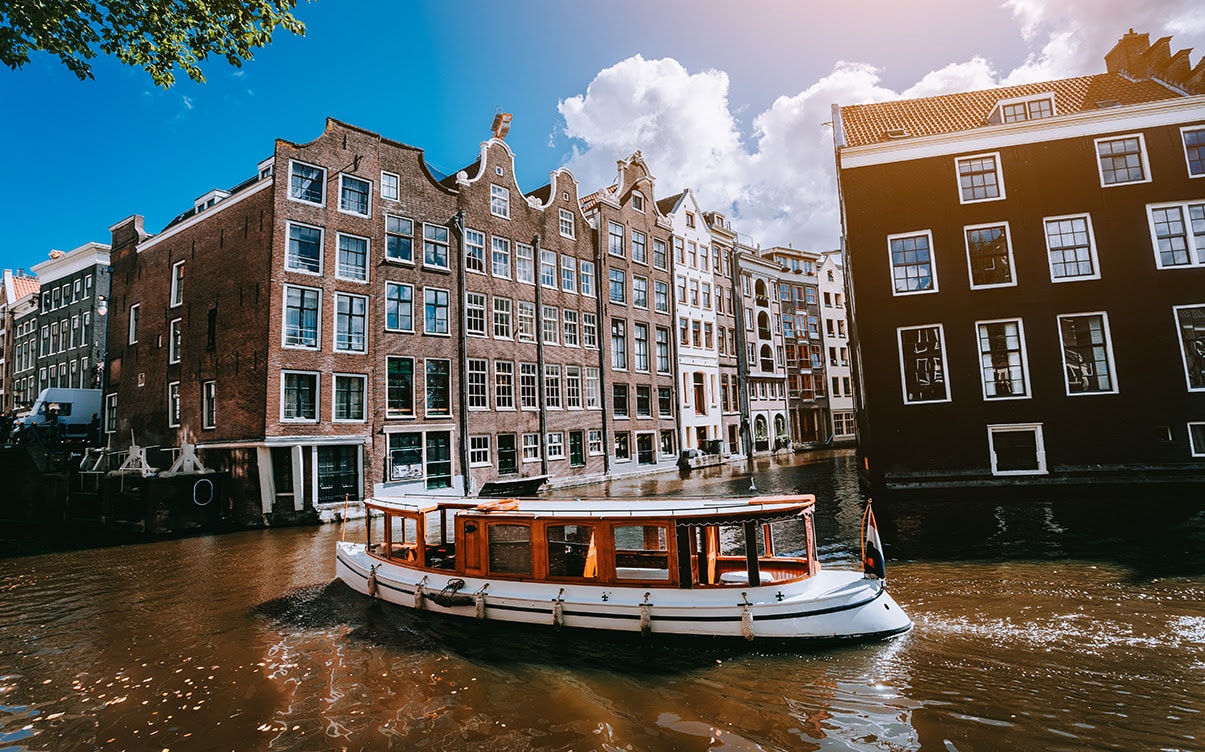
There are some cheaper hotels in the area as well, but they either have worse views, worse neighborhoods, fewer amenities, fewer things to do nearby, or some combination of all of the above. You can stay in the canal district for around $100 a night if you’re fine with a two-star or lower three-star hotel, or if you don’t need to be directly on a canal.
Or, you can stay a little further outside the city center. There are a thousand hotels in neighborhoods all around the city center (and many more even further away), but it’s easy to find a 4-star hotel with a $80-per-night stay and a metro trip under 20 minutes to get to the canals. For that matter, you can even walk the 2-3 km it would take to reach them.
In our view, it probably isn’t worth double or triple the price just to save yourself a few euros on bus fare or half an hour of walking. Public transit is reliable and easy to use in Amsterdam, and there’s so much to see and do even just outside of the central district that it’s worth staying further afield.
Where to Stay Around Amsterdam for Easy Access to the Canal District
Now let’s talk about more specific locations you might consider as your base for a trip to Amsterdam.
Option 1: Jordaan
Jordaan is the upscale district just to the west of the canal district. It’s your home for the classy, upscale architecture and lodgings that make luxury a way of life. Whether it’s brightly-colored waterfront facades, large and spacious townhouses, or the density of museums and art galleries, this is the place you expect to see all of the fanciest people, places, and things.
It’s also very much one of the most expensive districts to stay in around Amsterdam. Many of the hotels and accommodations in the area are a bit inland from the canals, or are on offshoot, cross-wise canals, so if you want to be right on the water, you’ll need to be picky about where you stay.
Jordaan is basically right on the canals next to the canal district, so it’s easily walkable right to the center of everything you want to see. It’s a little cheaper than being right in the canal district itself, and all you have to deal with is that short walk.
Option 2: Oost
Oost is the eastern chunk of the canal district and the zoo on its north end, but stretches south along the river down towards some more residential areas and some farming areas. It’s home to some of the hippest culture in Amsterdam, and we mean that in the “hipster” sense as much as anything. Bars and breweries, boutiques, ethnic food stores, art shops, and a whole host of richly cultural institutions litter this area.
The best places to stay in Oost are just a couple of kilometers outside of the canal district. A Short ride on the metro or a 20-30-minute walk will bring you to a variety of accommodations that will only cost you $80 or so for a night at some very nice places. You can also get cheap accommodations at 2-star and 3-star hotels for only $50 or so a night.
The trade-off is, you aren’t going to be staying on any of the canals when you’re in this area. Only a few smaller offshoot canals cross the region, and the hotels aren’t usually situated on them. It’s no big loss, though; with some of the largest city parks in the area, and plenty of interesting neighborhoods to explore, there’s still plenty to see and do.
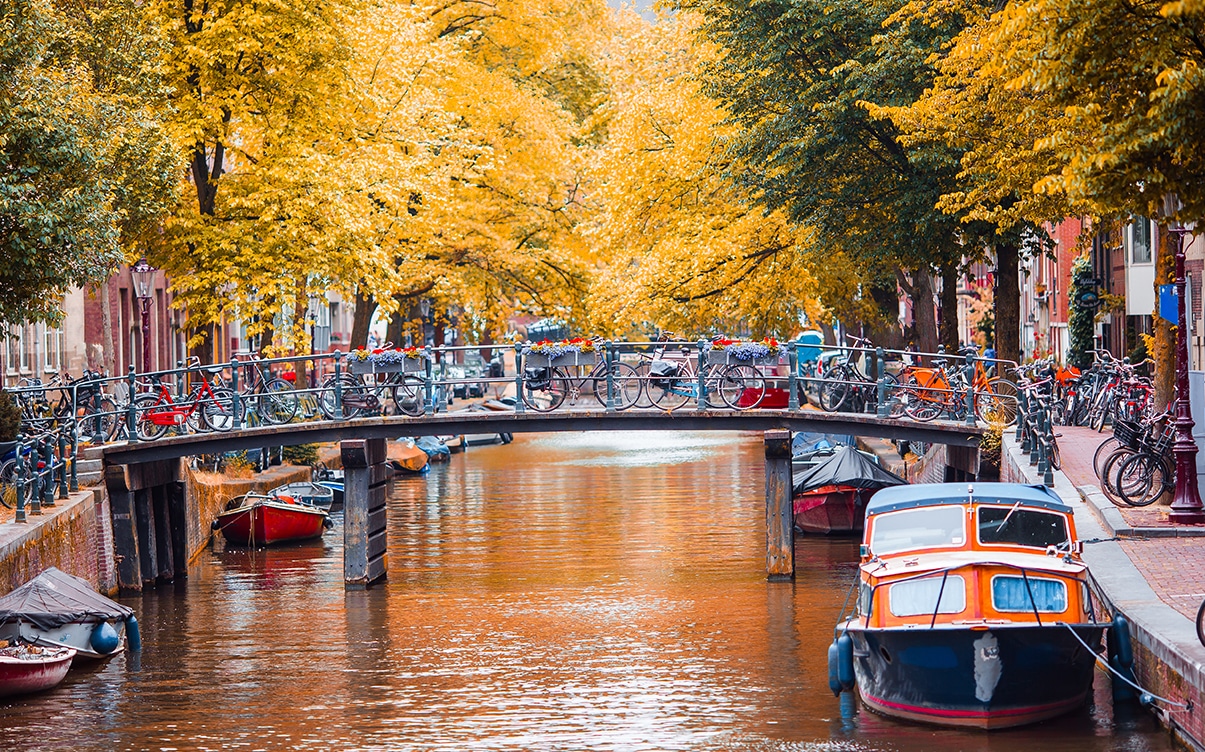
Option 3: Noord
Noord is actually across the main river from the canal district. It’s relatively small and borders on a bunch of sculpted forest, with extensive farmland just outside the city. It even has a couple of small canals of its own.
Noord is a smaller region of the city and home to some of the, shall we say, less hospitable regions of the city. There are still some very nice hotels and accommodations, and the floor for a rough area in Amsterdam is still pretty high compared to some other countries and cities around the world, but it’s still what you might consider the rougher side of the city.
There aren’t a lot of hotels in the immediate riverside area, and those you do see are, for example, a Holiday Inn Express. Heading a little northwest gives you a few more options, like the Sir Adam Hotel. If you go further northwest to Noord West, there are also some bigger and better hotels, but you’re getting further and further away from the canal district and into some of the more commercial and industrial areas of the city.
Option 4: De Pijp
De Pijp is actually just across the Amstel from Oost. It’s a relatively small neighborhood and is home to the Latin Quarter. It’s lively and bohemian, with a lot of unique culture and flair, along with tons of music and activities at all hours. If you’re looking for a more party-like atmosphere but you don’t want to stay in the red-light district (either because you have a family along or you want some quiet), De Pijp is a great option.
This is also a place where you can find some very luxurious accommodations for a fraction of the price of just ten minutes north in the canal district. A five-star hotel in this area is just $250 a night compared to the $500-$1,000 above! More typical hotels are well under $100, and a riverside 5-star is under $200.
Hotels Versus AirBnBs
One thing it’s worth mentioning here is that the culture surrounding temporary vacation rentals in Amsterdam is very, very different than it is in America and many other cities around the world. Amsterdam has effectively outlawed the Airbnb model by enforcing strict limitations on what can be rented out. They’re also generally quite expensive, because in order to even offer a vacation rental, a fairly expensive permit is required, and those costs get passed along.
Even if you do find temporary vacation rentals in Amsterdam, it’s vastly more likely to be single rooms in an otherwise-occupied house, rather than entire homes you rent and use at your leisure.
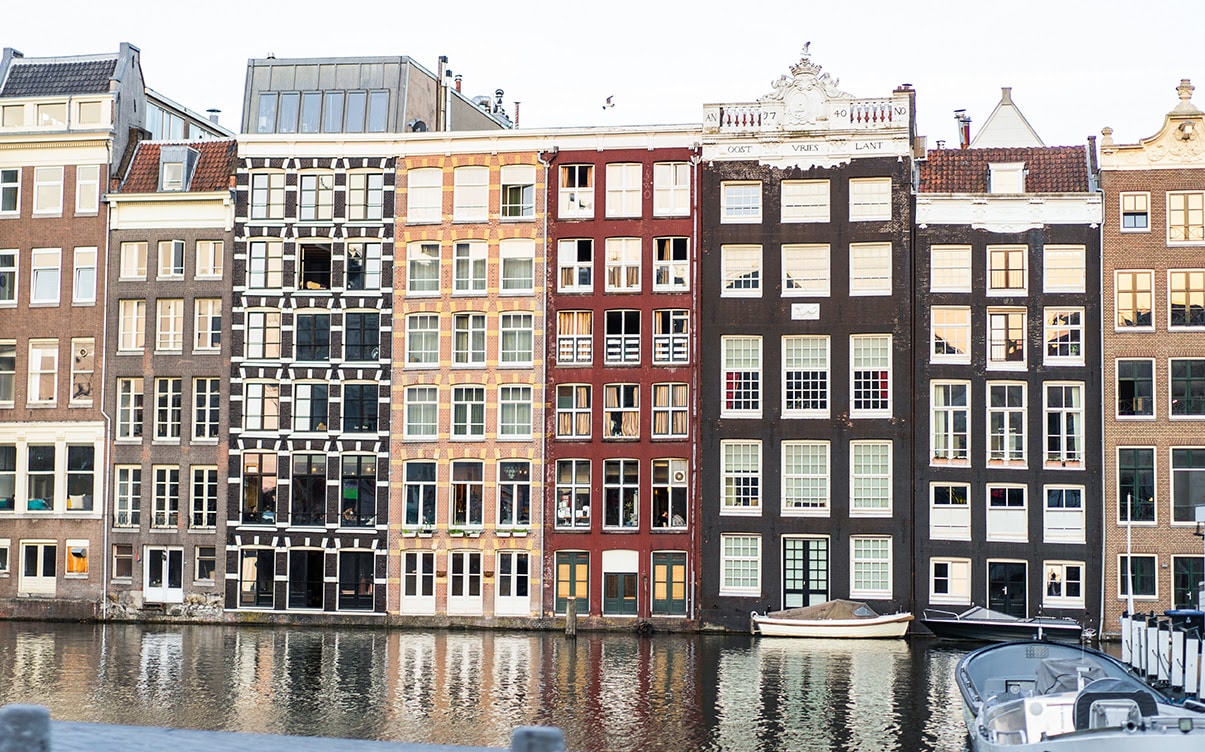
There are plenty of hotels, and if you’re looking for low-cost shared options, there are some hostels as well, but the “rent someone’s second home” model doesn’t really exist.
Enjoying the Canals of Amsterdam
The truth is, there’s almost no wrong way to stay in Amsterdam. With a robust metro system and easy access to the canals from pretty much anywhere, you’d have to go out of your way to have a bad time. Obviously, usual travel warnings apply – secure valuables, be aware of scams, and travel safely – but Amsterdam is generally a friendly, outgoing, and laid-back city. It’s incredibly easy to rent a bike or scooter and explore the center of the city at your leisure.
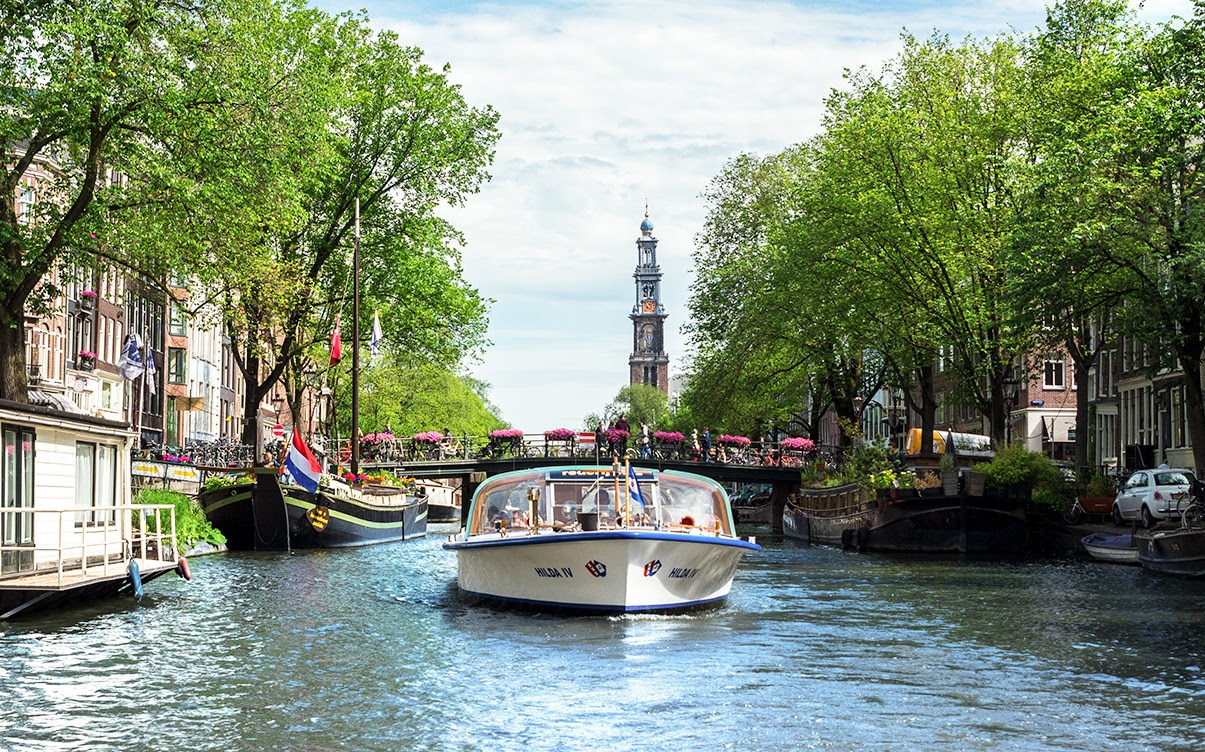
Staying a little further out gives you one thing you don’t get from the city center, and that’s peace and quiet. Amsterdam is a vibrant city with a thriving nightlife, and while that’s great if you’re out in the thick of it, it can be grating if you’re trying to sleep after a long day on the town. For us, that’s worth it. For you? Well, let us know when you go, alright?