Singapore Street Food Tour: 10 Hawker Centers to Try
Disclaimer: This post may contain affiliate links. Please see our Disclosure Policy and Advertiser Disclosure for details.

Singapore is one of our favorite places to visit. It’s easy to reach, popular, and modern in the big cities, but it still has plenty of relatively pristine wilderness in the nature reserves to explore, as well as a near-infinite variety of attractions, tourist destinations, and things to do. It’s also home to the world’s tallest indoor waterfall, incredible scenery, and a vibrant culture you can’t find anywhere else in the world.
It’s also a very small country to explore. The entire country of Singapore is just 276 square miles; Los Angeles itself is nearly double that area! That means you can take a trip to Singapore and explore pretty much the entire country in a single trip. However, we can basically guarantee that you’ll want to come back and see the things you missed, because it’s so densely packed with cool stuff.
One of the best parts of Singapore is the food. It’s a unique mixture of elements from Chinese, Malaysian, Indian, Indonesian, and global influences, and you never know quite what you’re going to find next, but you always know one thing: it’s going to be delicious.
There’s more to the food than just the food itself, too. There’s an entire culture surrounding food, and one of the most interesting aspects is the hawker center.
What are Hawker Centers?
Centuries ago, a big part of the food culture in Singapore centered around what we would think of as food carts. Hawkers with food carts would set up shop on streets and at corners, hawking their meals to those who passed by. Wafting aromas, the sounds of sizzling, and the general signs of popularity would draw in more people, and the individual hawkers could make their day’s profits and go home to live their lives.
Back in the 1800s, a lot of hawkers were immigrants to the country, setting up wherever they could, often being driven away if they grew too popular or disruptive to the surrounding areas, and popping back up in new areas when they could. The result was an always-changing, often thriving selection of different foods from all around Southeast Asia.
Cooking food in the open streets always presents some challenges, of course. Sanitation, food safety, selection, and amenities; all of these could be lacking. Savvy diners would have to learn which hawkers were better and which might be risky to eat, and often learned through bouts of food poisoning.
In the 1960s and 70s, the government in Singapore decided to regulate hawkers, as they had exploded in popularity after World War II and were becoming as much of a nuisance as a boon. Lack of water meant cleanliness was rare, lack of trash services meant refuse piled up, and the popularity of the style meant more and more hawkers were crowding the streets.
This led the government to make a few important changes to the country and the system of hawking. They pushed for regulations and registrations, forcing hawkers to register and carry licenses. They were also frequently pushed out of the main streets and into out-of-the-way parks and lots. Many illegal hawkers still plied their trade, but it was riskier for both the hawkers and the diners.
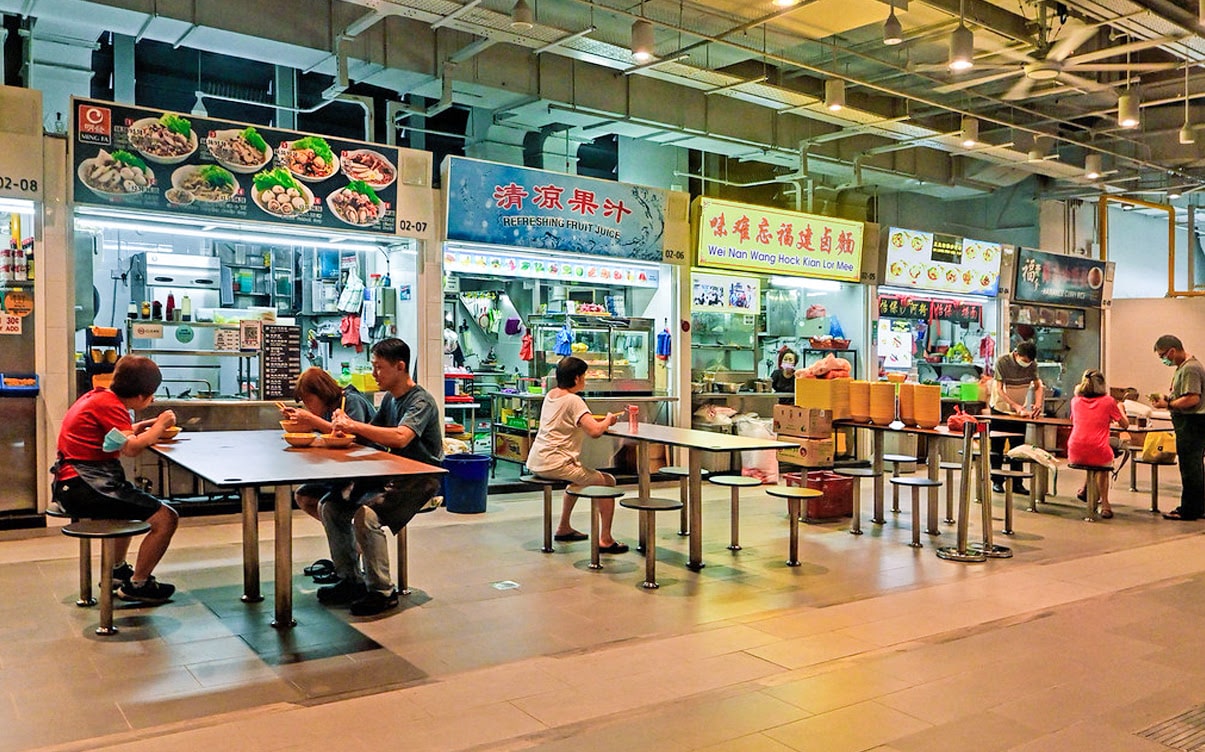
Fortunately, rather than try to wage an endless war against street vendors, the government hit on a better idea: designate areas where hawkers could ply their trade, with access to amenities shared by all, to improve public safety and sanitation. Set up water hookups, restrooms, trash service, and rules, bring in hawkers and put them all under this one roof, and you have a hawker center.
The end result is something like a culinary marketplace. If you think of a farmer’s market, except every stall is a hawker selling a delicious cooked meal instead of fresh produce, or if you think of the food court in a mall or other hub, you’re getting closer to what a hawker center is. They’re dense, they’re bustling, they’re packed with people, delectable smells, delicious foods, and a unique experience you can’t find outside of Singapore.
Today, over a hundred hawker centers can be found throughout Singapore, and half of them were built between 1974 and 1979. Some have themes, like garden surroundings, while others are just facilities packed with whoever has claimed a space.
Hawker centers also helped make hawking more of a tradition for many. A huge number of today’s hawkers are second or third generation; they’re serving the same meals in the same places in the same ways as their parents and their grandparents before them. You aren’t just getting the equivalent of fast food in Singapore: you’re getting incredible traditions.
Hawker culture is here to stay. In 2020, UNESCO recognized it and added Singapore hawker culture to the UNESCO Representative List of the Intangible Cultural Heritage of Humanity.
Ten Hawker Centers to Try on a Trip to Singapore
Many people who visit Singapore look for the one or two hawker centers closest to their hotel and keep going back every time. And really, who can blame them? Hawker centers have anywhere from dozens to nearly 700 stalls, and it can take a lifetime to try everything.
Still, if you’re traveling throughout the country and want to at least visit and try foods from a variety of different hawker centers, here are ten you should prioritize.
1: Maxwell Food Center
Maxwell Food Center is one of the oldest hawker centers in all of Singapore. It’s one of the few places that was a hawker hub before hawker centers were even invented, and some of the stalls located there go back generations. The hawker center itself has effectively been built up around the hawkers, rather than being constructed as a facility for them to move in.
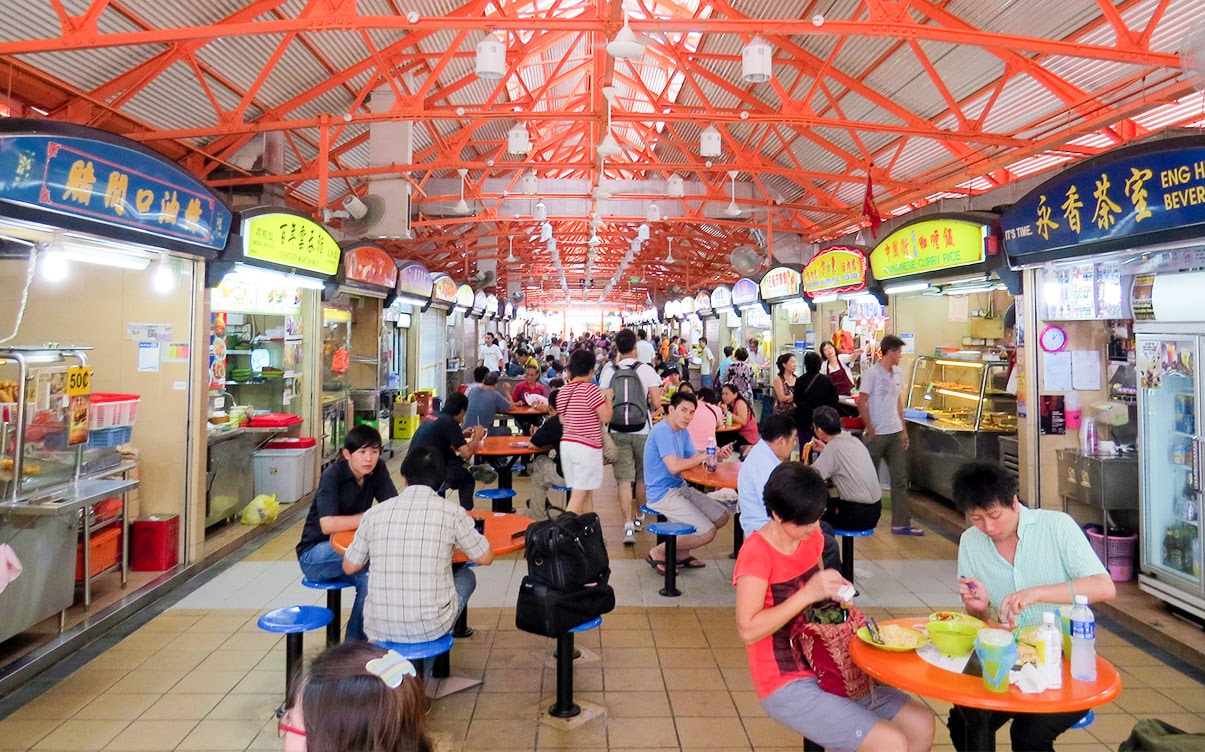
Maxwell is also on nearly every list of hawker centers, and with good reason. The history is important, the location is excellent (by the marina, the gardens by the bay, and adjacent to historic Chinatown), and it has some frankly incredible food.
If you’re expecting basic street food – delicious but perhaps not fine dining – you’re in for a surprise. Part of Maxwell’s popularity is that one of the stalls there has even earned a Michelin star!
2: Lau Pa Sat
This one is possibly one of the most visited hawker centers, because it’s located right in the center of the central business district, or CBD of Singapore, which is itself a tourist attraction in its own right. The building is iconic and stands out from the gleaming skyscrapers all around, and that’s just from the outside.
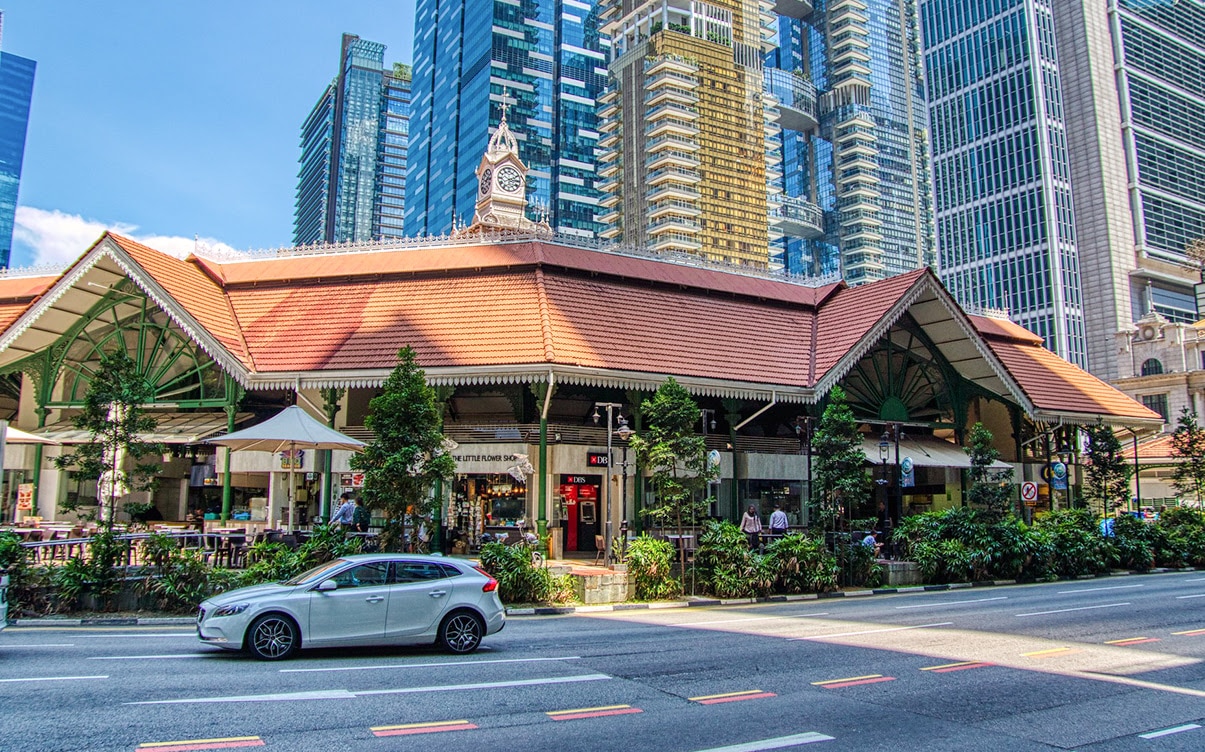
Inside, you can immediately see why Lau Pa Sat has won numerous awards, from tourist awards to retailer of the year in Singapore. It’s also open 24 hours, though individual stalls have their own specific hours and may be closed at night.
It’s also in direct competition, in a way, with Maxwell; the two are just a ten-minute walk apart. It’s no wonder that, if you’re staying in the area, you’re going to have a hard time reaching beyond them.
3: Chinatown Complex
Practically just across the street from Maxwell, the Chinatown Complex is Singapore’s largest hawker center. It has some 700 stalls, though only around 250 or so of them are for food. That’s because this is not just a hawker center, but also a market, sort of like an immense semi-open shopping mall. They have events, live music, and a whole lot more. You can easily spend a whole day exploring just this center!
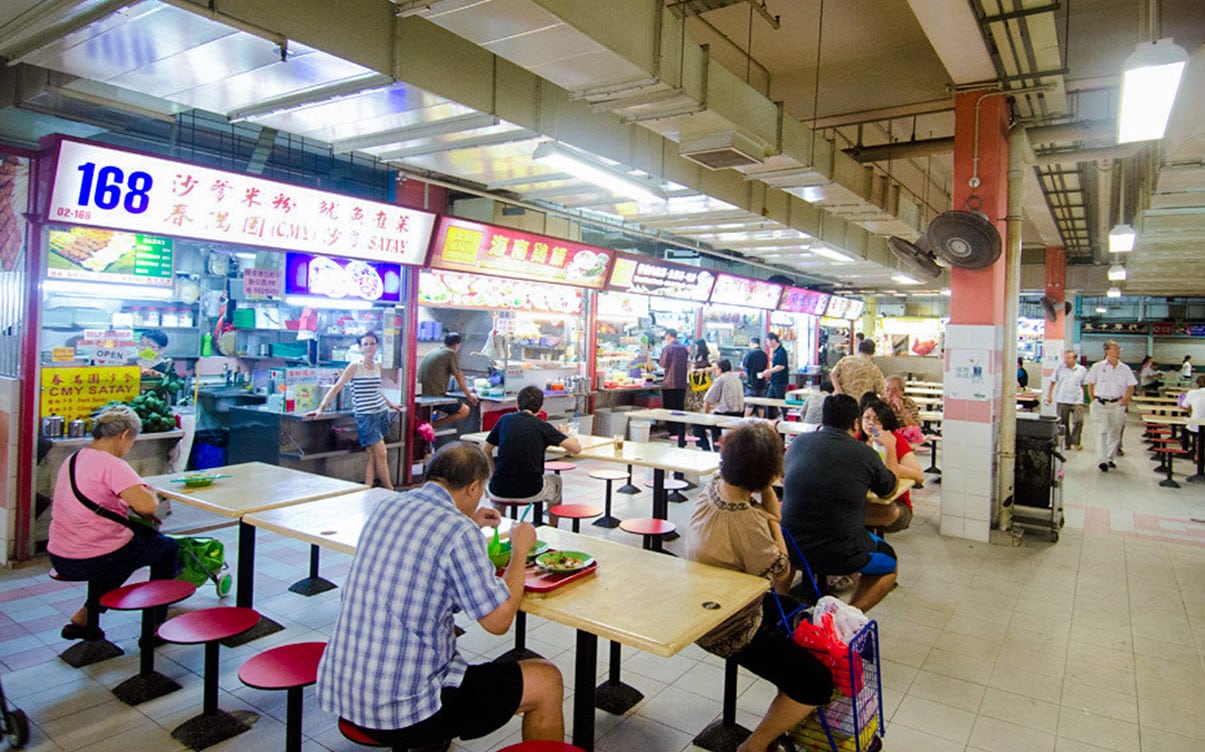
It’s hard to put into words how dense and busy this place can be, with multiple floors of vendors, tables packed everywhere, and thousands of people enjoying their time.
4: East Coast Lagoon Food Village
Located a little way up the coast to the east of the previous hawker centers, this one is the only coastal hawker center where you can grab your food and walk right out onto the beach. It’s also full of incredible stalls, including another Michelin-awarded stall for satay, making it very sought-after.
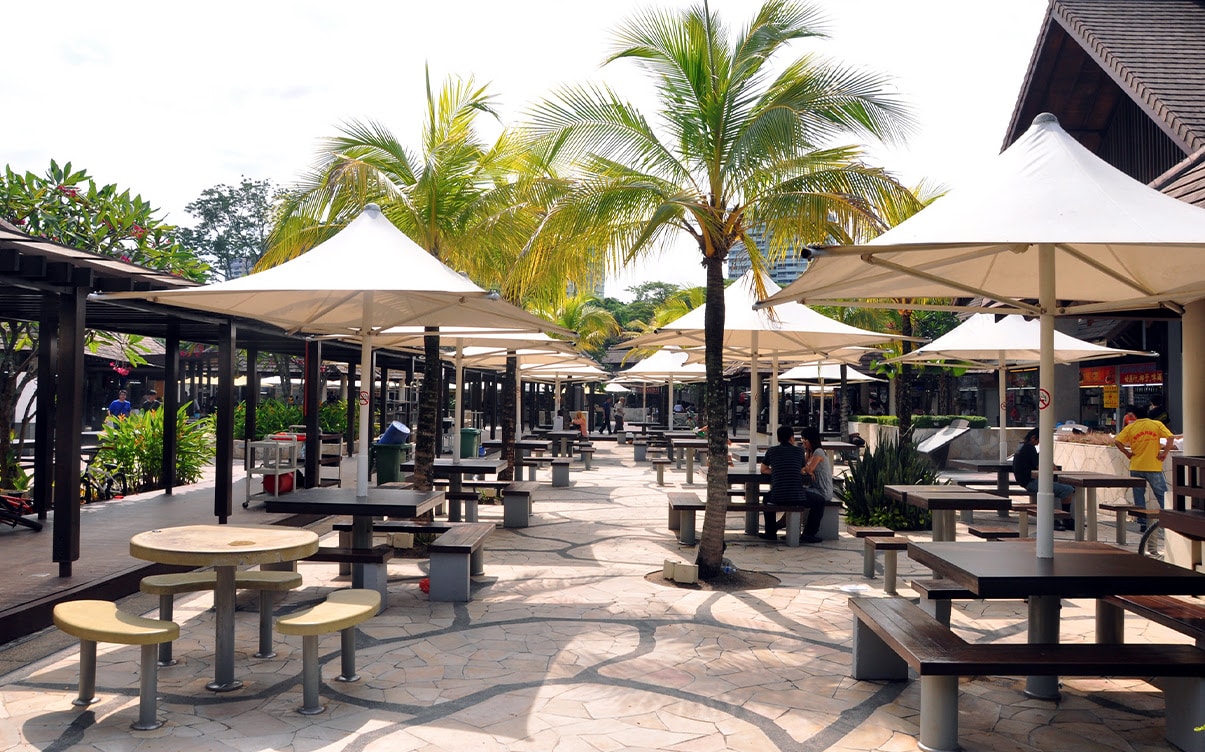
The only downside is the crowds, which can pack the beach while you wait for your food.
5: Marsiling Lane Food Center
On the complete opposite side of Singapore, towards the north by the border with Malaysia, the Marsiling Lane Food Center is an interesting option. Several great parks and the northern waterfront are all nearby, and if you’re staying in this northern region, it’s a close-by option.
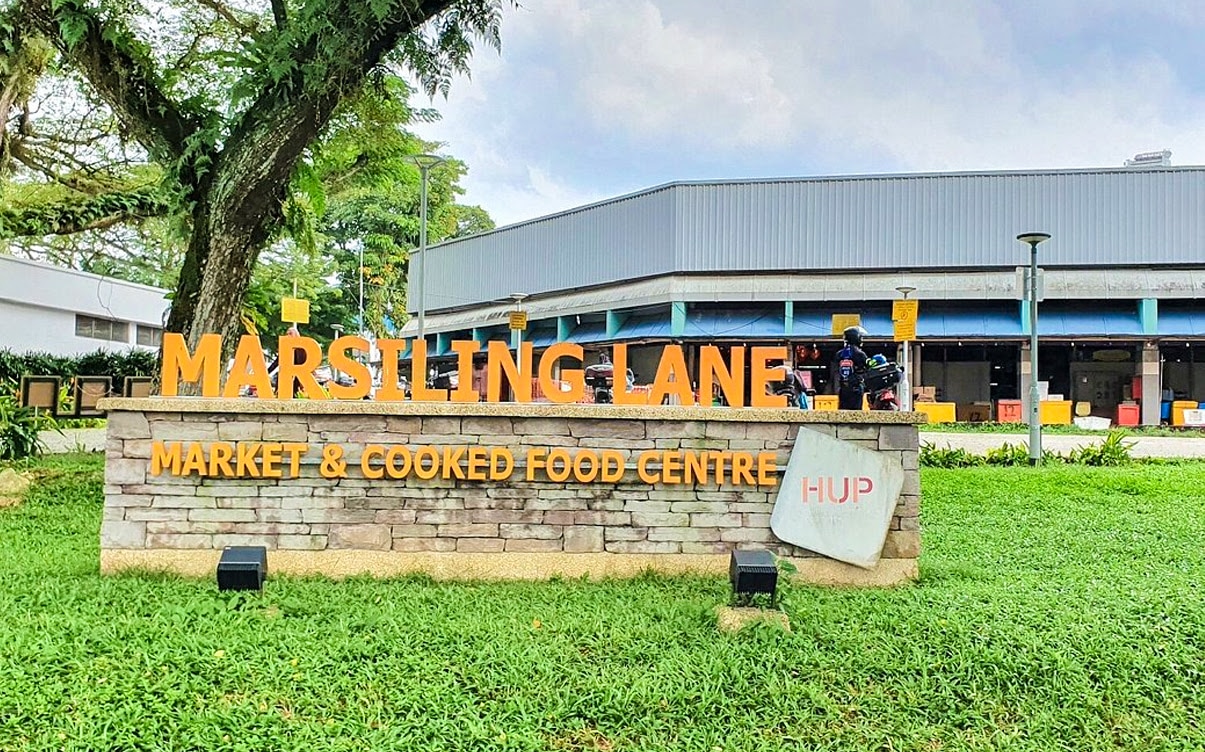
The trick with this hawker center is that it’s largely a breakfast center. Most of the stalls tend to close up shop around 1 pm, so swing in for breakfast or an early lunch, but don’t expect to find dinner there.
6: Yishun Park Hawker Center
A stand-out building accessible by all means of transit, Yishun Park is a smaller hawker center located in the northeast of Singapore, right near Yishun Dam, the Wisteria Mall, and the Simpang Nature Preserve. It’s also directly adjacent to the Dipterocarp Arboretum.
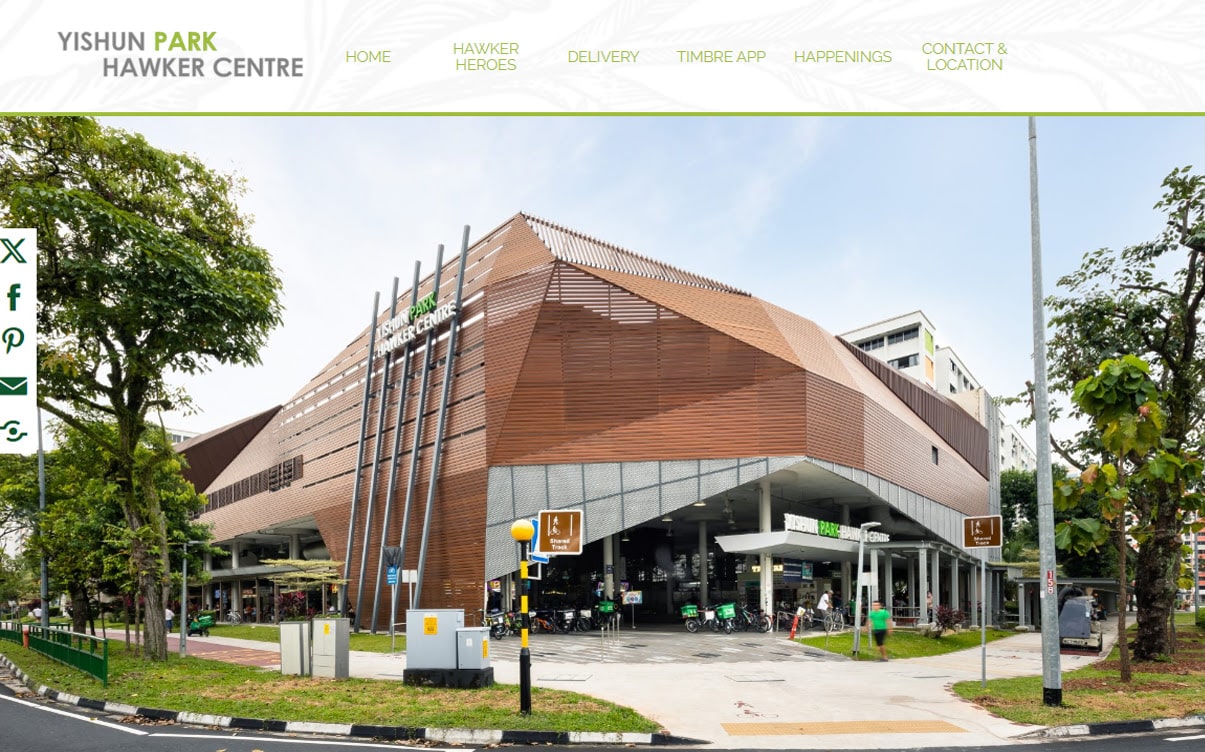
There are only around 40 food stalls in this center, but it only actually takes one or two to make a good visit, right?
7: Broadway Food Center
Broadway is actually a chain of food centers, with several locations around Singapore.
The one we’re mentioning specifically is the one right by the Singapore EXPO and the Changi Airport. It’s a great place to grab a bite before or after visiting the EXPO, and it’s fairly well located for visiting a lot of the attractions in the surrounding area.
8: Alexandra Village Food Center
A ways further west of Chinatown, the Alexandra Village Food Center is a bit out of the way and ends up a little less crowded because of it, but it’s absolutely fantastic.
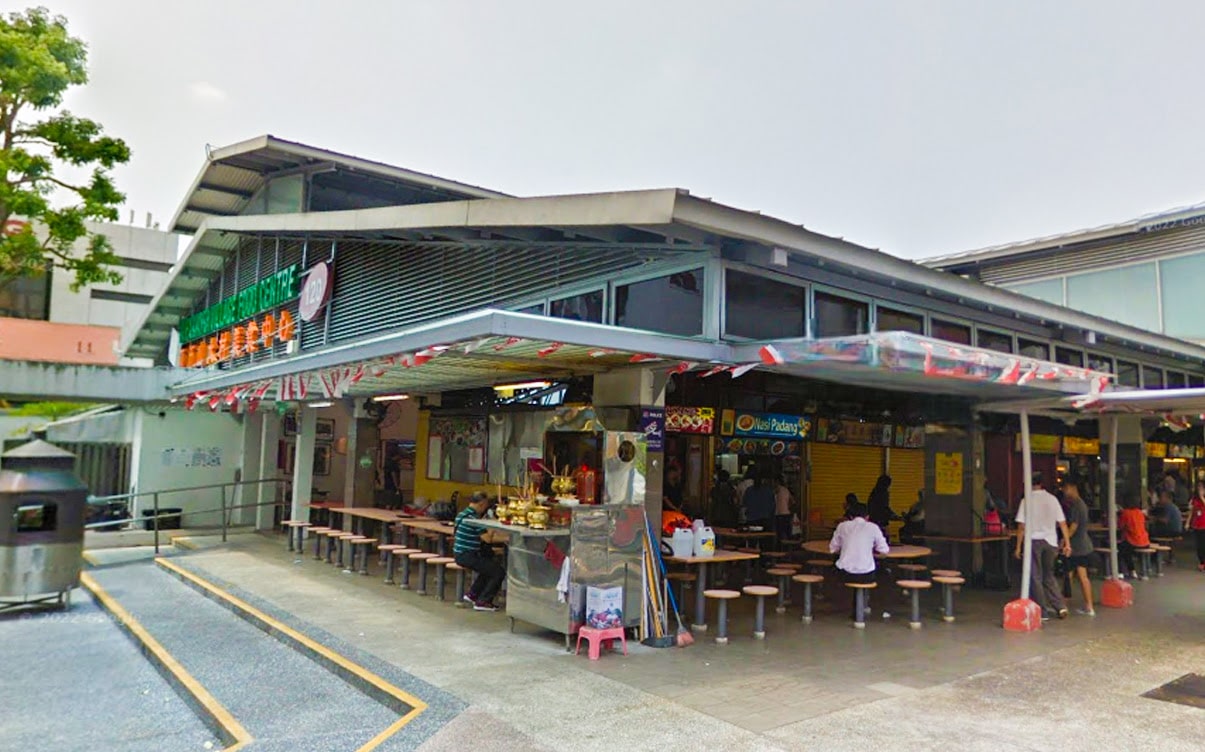
In particular, you can get some very, very good dumplings and soups in this center, and you may be hard-pressed not to come back time and again.
9: Zion Riverside Food Center
While there’s only the one beachfront food center, this food center is right on the Singapore River, so you get some of that calm water ambiance, but fewer crowds of tourists flocking to the beach. It’s still relatively close to Chinatown, but since it’s across the river, there’s a bit of a different atmosphere.
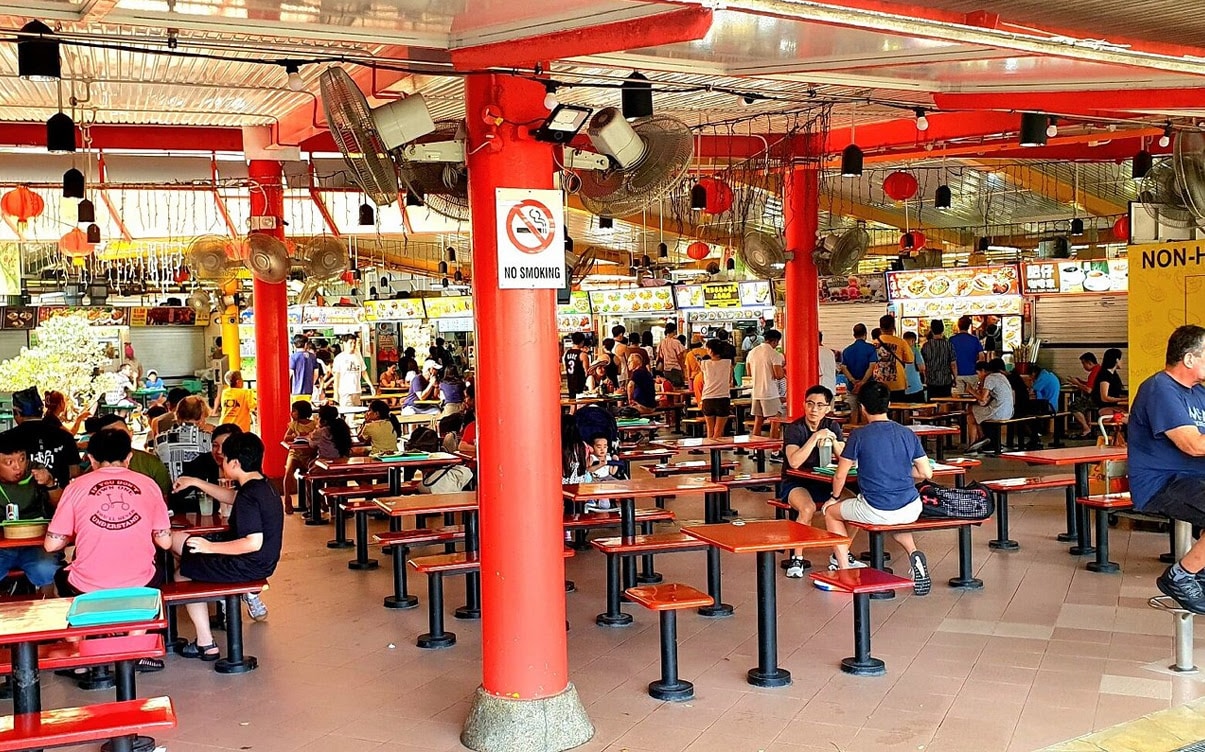
There are also at least four Michelin-listed stalls in this center, so you know there’s definitely some great food to be found.
10: Sembawang Hills Food Center
One of many hawker centers in the Yio Chu Kang area, this one is right off the edge of the nature parks in the center of Singapore, and makes for a great place to refresh after hiking through the trails.
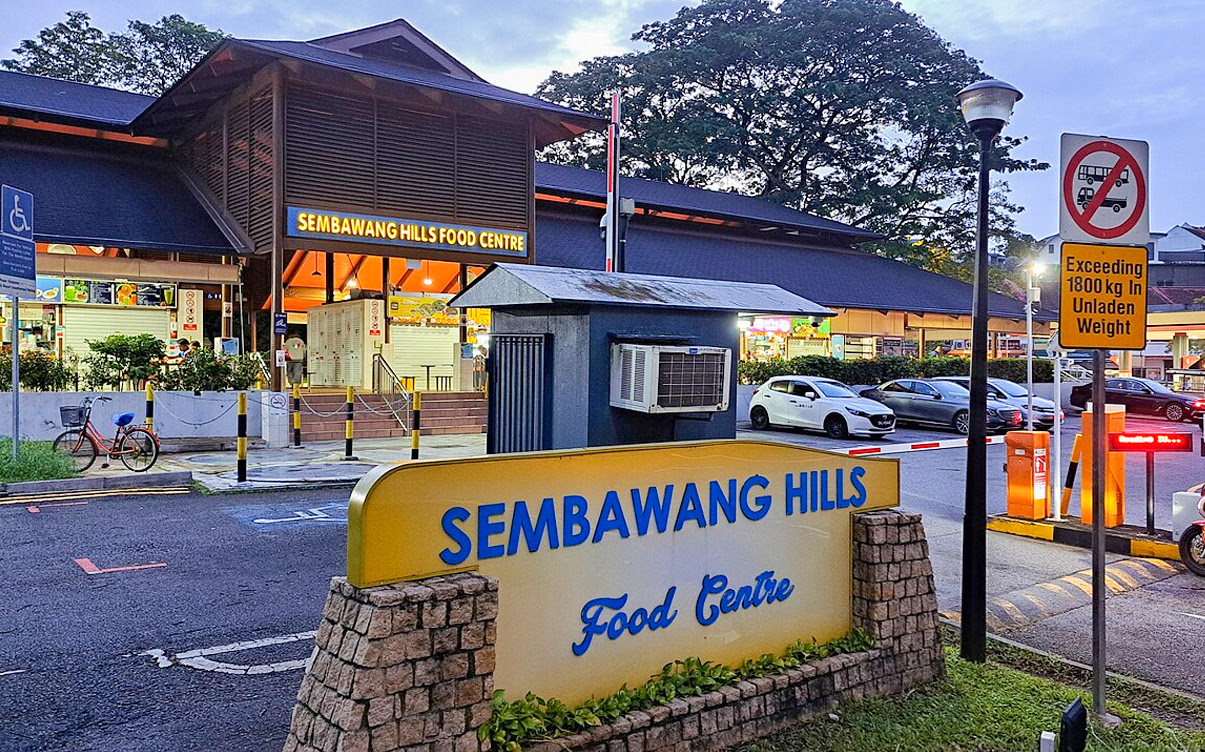
It has a more retro feel – like it hasn’t been updated in the last decade, like some of the others – but it’s no less delicious for it.
Tips for Getting the Most from Hawker Centers in Singapore
Let’s finish things off with a few tips on how to make sure you’re having the best experience in the hawker centers when you visit.
First and foremost, time your visits. The lunch rush is intense, so swing in after 2 pm if you don’t want to be waiting in line for hours.
Another thing to keep in mind is that there are a lot of hawker centers in Singapore, and since it’s such a small country, even just looking for centers near where you are is likely to bring up a bunch of options. There are, however, locals willing to provide walking tours to the best spots and hidden gems, which can be a great way to find hotspots you wouldn’t have known about just from Google Maps reviews or other international resources. It might be worth a try if you want to be more of a culinary tourist.
Our biggest piece of advice is just not to get too caught up in the Chinatown area. You can do an entire top ten list of just hawker centers in that handful of square miles, but you really miss out on a lot of the country if you don’t go further afield. Don’t be afraid to head further out!
Truthfully, it’s hard to say there are any bad hawker centers in Singapore. They’re so varied and full of options, you’re sure to find something to love.